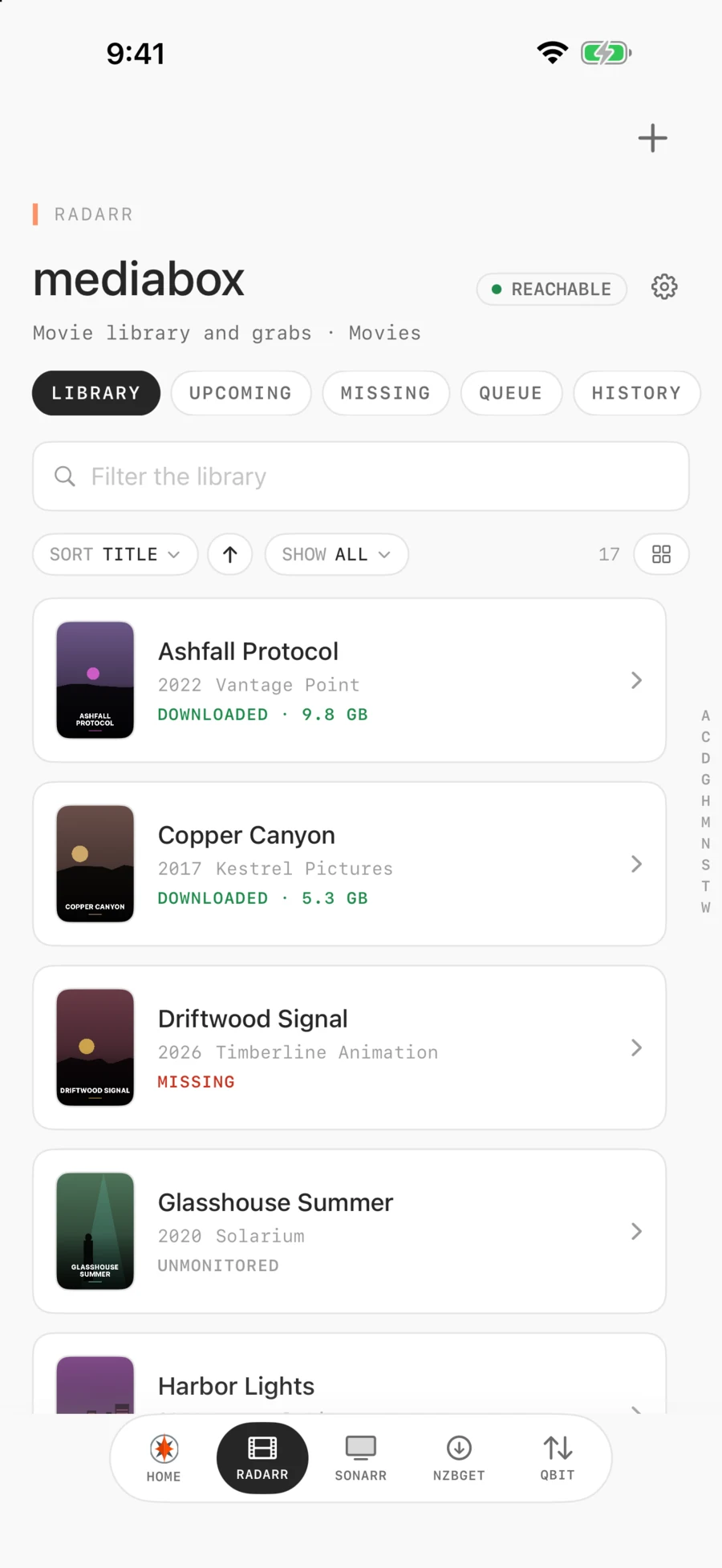
Artwork, sorting, the alphabet rail. Films and series exactly as the app arranges them, seasons opening into episodes, and one search that crosses every module you run.
Native app and web app, one product
Your whole media stack, on your phone.
A native iPhone and iPad remote for the seventeen services you already run. On your own network it talks straight to your servers, with no account and nothing of ours in between. Away from home, an optional lodestar account and our relay carry the connection to an agent on your own machine.
iPhone and iPad · iOS 17 and later · agent free · $19.99 once for the app · $2.99 a month for remote access
lodestar · library
[ 6 TITLES ]





ABCD
Artwork and sorting exactly as your server arranges them, seasons opening into episodes.
seventeen services · one library · your servers
Across the libraries lodestar drives
17 services
every one first class, not a lowest common denominator
No sign-up
on your own network the app points straight at your servers
[ 01 / 05 ] · In a browser
The same app, without the App Store.
Sign in at lodestar.i8l.tech and your stack is there: Mac, Windows, Linux, Android, anything with a browser. A browser interface for the same library, remote access and the everyday controls; the phone app carries the deeper per-service screens.
The whole library
A real calendar
Month, week, forecast, day, agenda. On disk, grabbed, missing and unmonitored are coloured apart, so a week reads before it is read.
Search, then decide
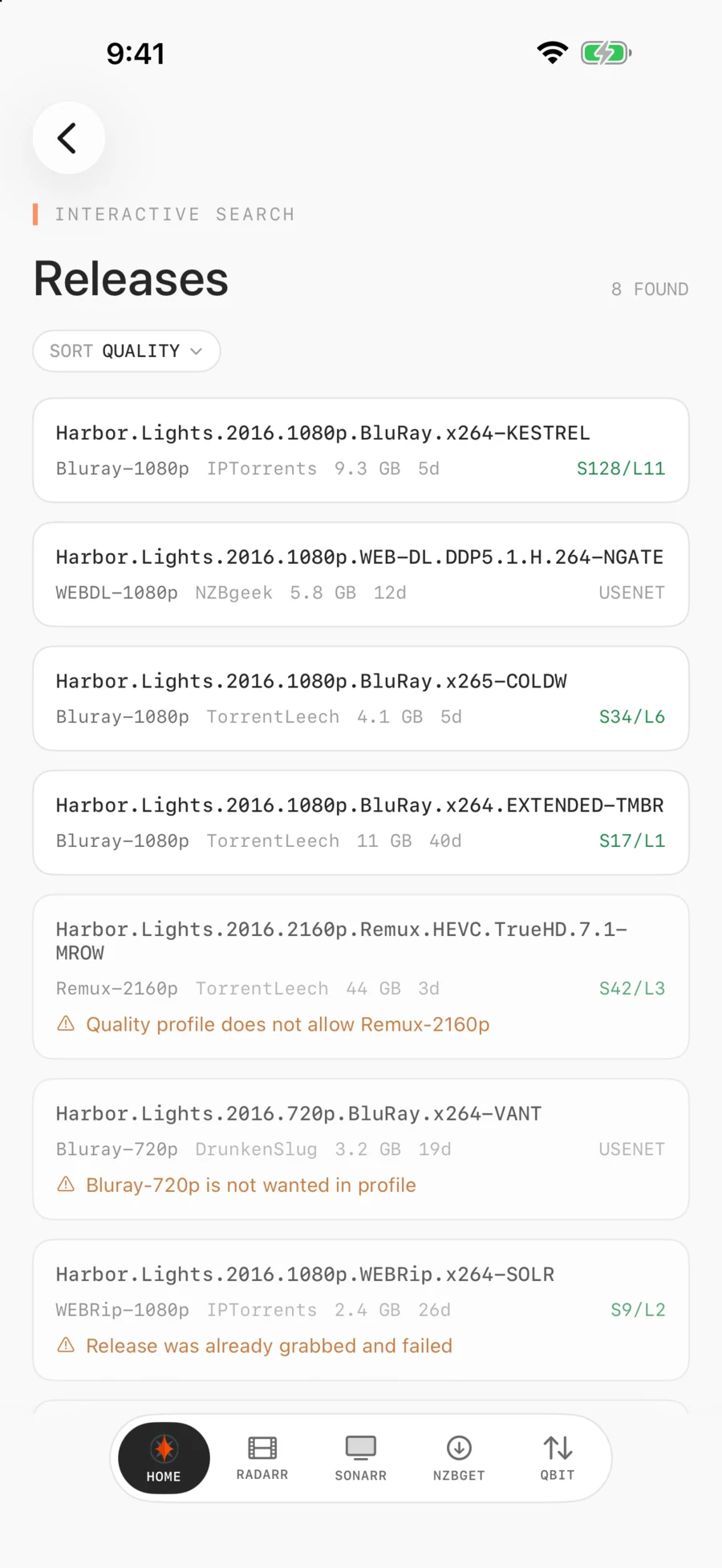
The full description before you commit, and how much room each drive has left when you choose where it lands. Automatic search, or take a release by hand from everything your indexers offered.
Fix it from anywhere
Retry a stuck download, blocklist and search again, edit a film, toggle an indexer, cap the download speed, pause a torrent. Service configuration reaches the agent sealed, so a signed-in device does not retype it.
On a phone
Android installs it to the home screen, where it opens full screen with its own icon and its own place in the app switcher. Your library stays readable when the signal does not.
Still sealed
The relay stores what it cannot read. The browser holds the key, the same as the phone does, and decrypts your library locally.
Remote access and the web app need a lodestar account, and both come in through the relay. lodestar lifetime includes thirty days of it; after that, lodestar monthly. The agent and its web app on your own network stay free.
[ 02 / 05 ] · What it does
Deep, not shallow.
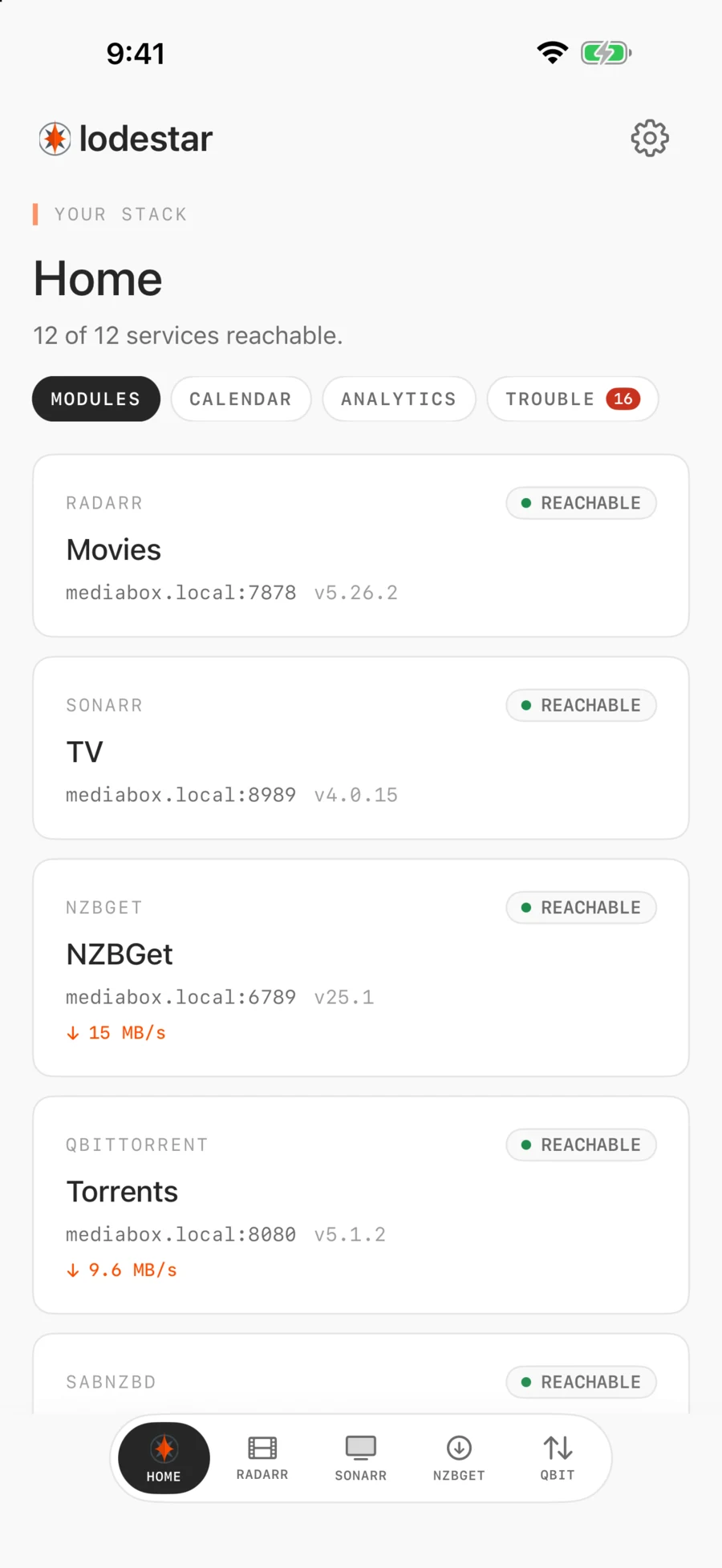
Every service gets its real surface, not a status widget. These are the things people actually open an app on the sofa to do.
Libraries and grabs
Browse, add and fix. Add a film or series with its root folder, quality profile and monitoring, run an interactive search, read why each release was rejected, and push the exact one you want to your client.
Download clients
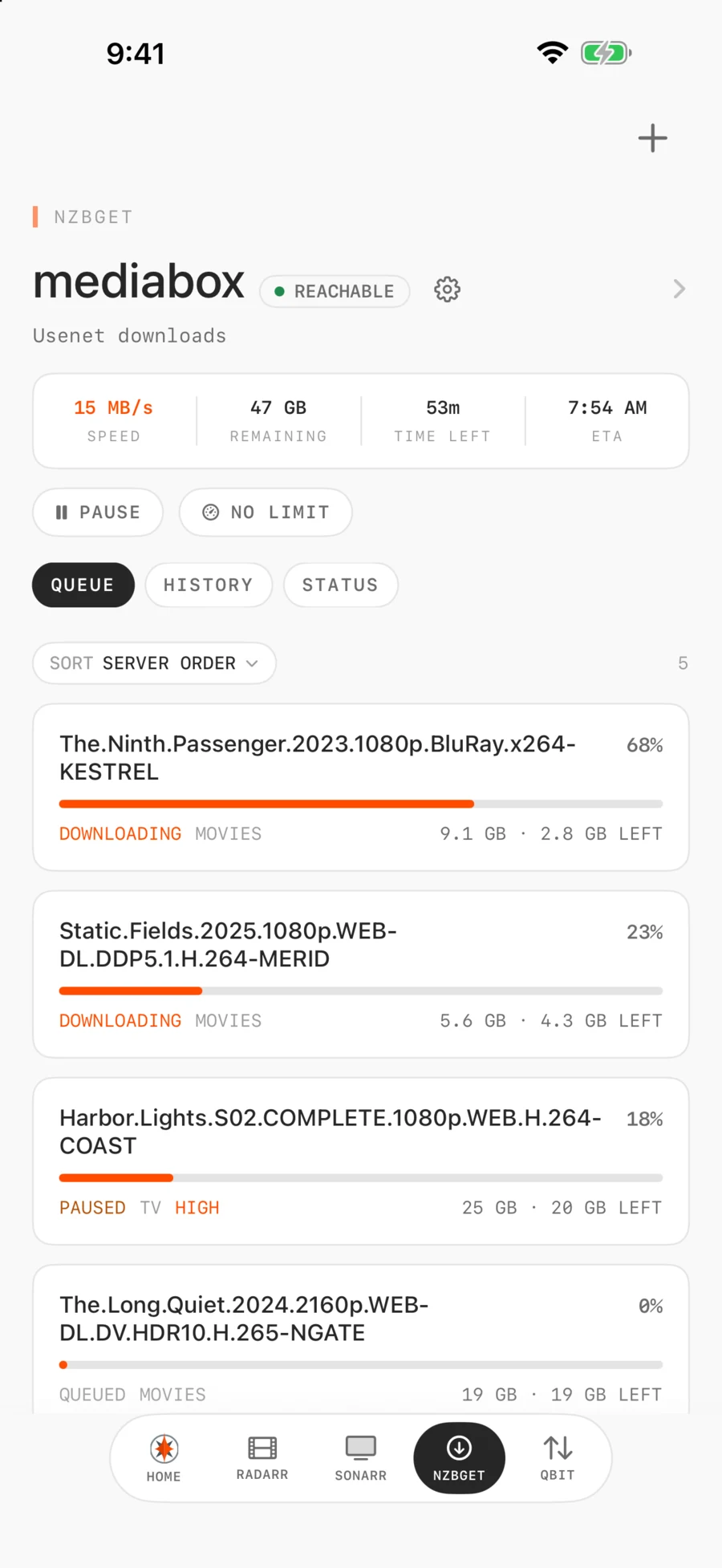
Actual control. Reorder queues, pause per item or globally, set speed limits, and open a torrent to its trackers, peers and per-file priorities. Usenet and torrents are equals here.
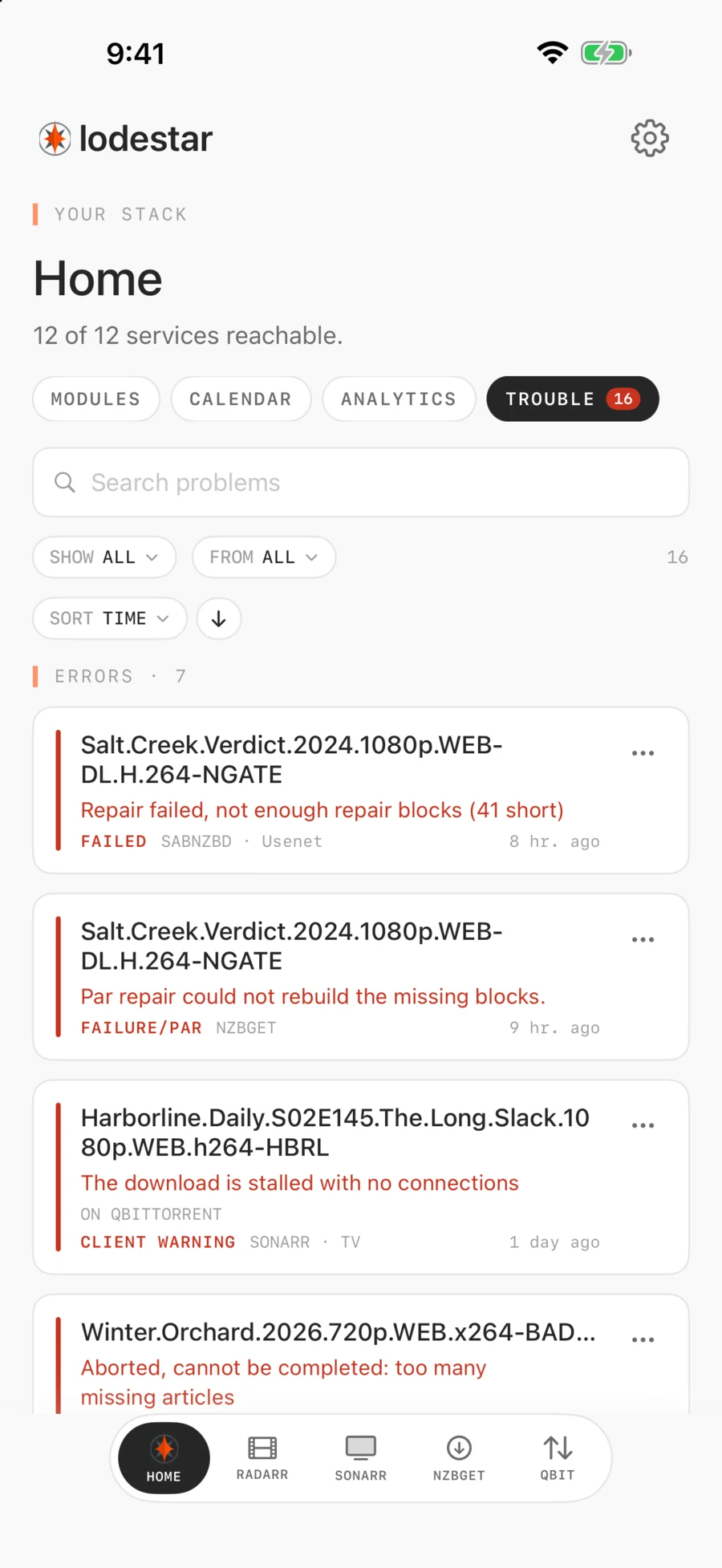
Trouble
One screen for what broke. Failed grabs, blocked imports, stalled torrents, benched indexers and servers that stopped answering, gathered from everything, with the remedies that are safe from a phone.
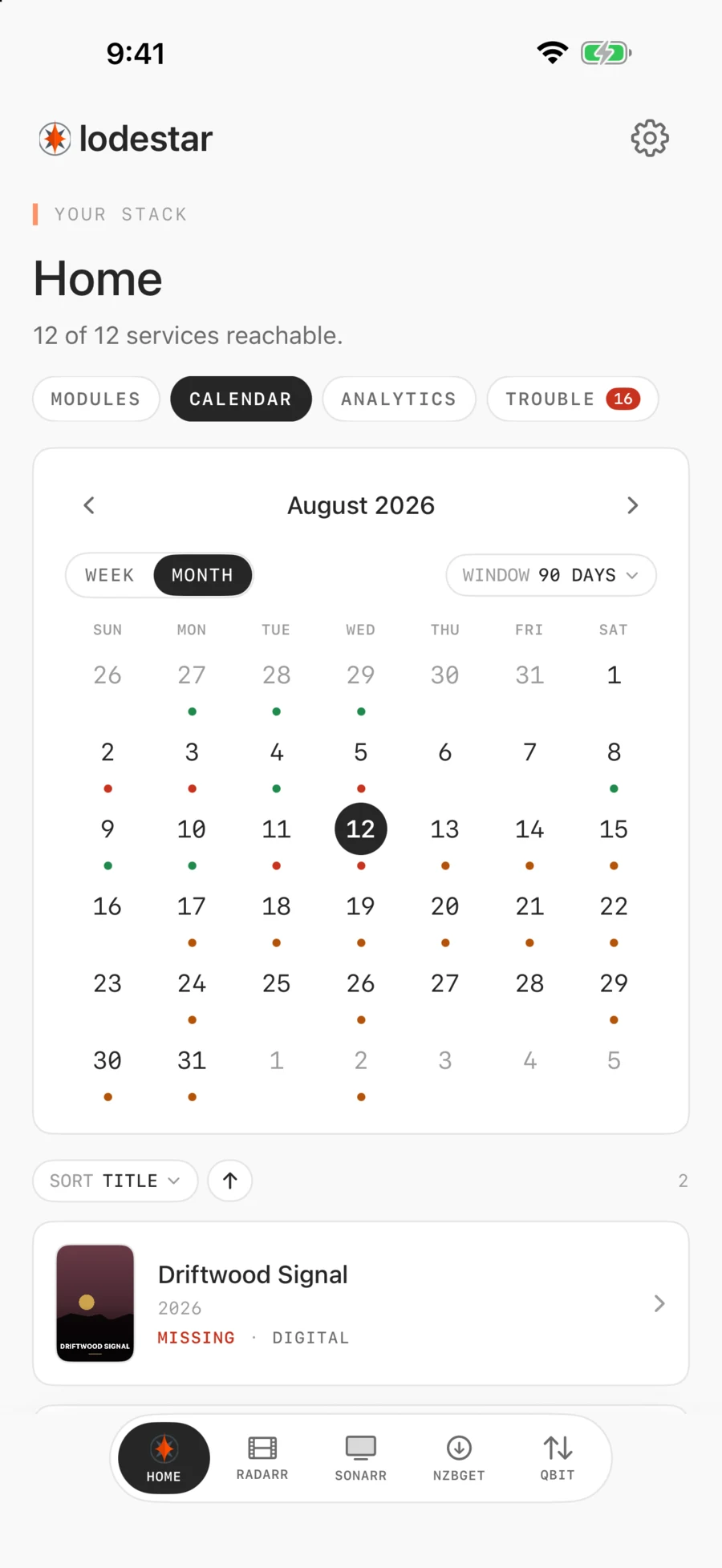
Calendar
Everything arriving, merged. Films and episodes from every Radarr and Sonarr in one week or month view, and a title is a link into the show it belongs to.
Analytics
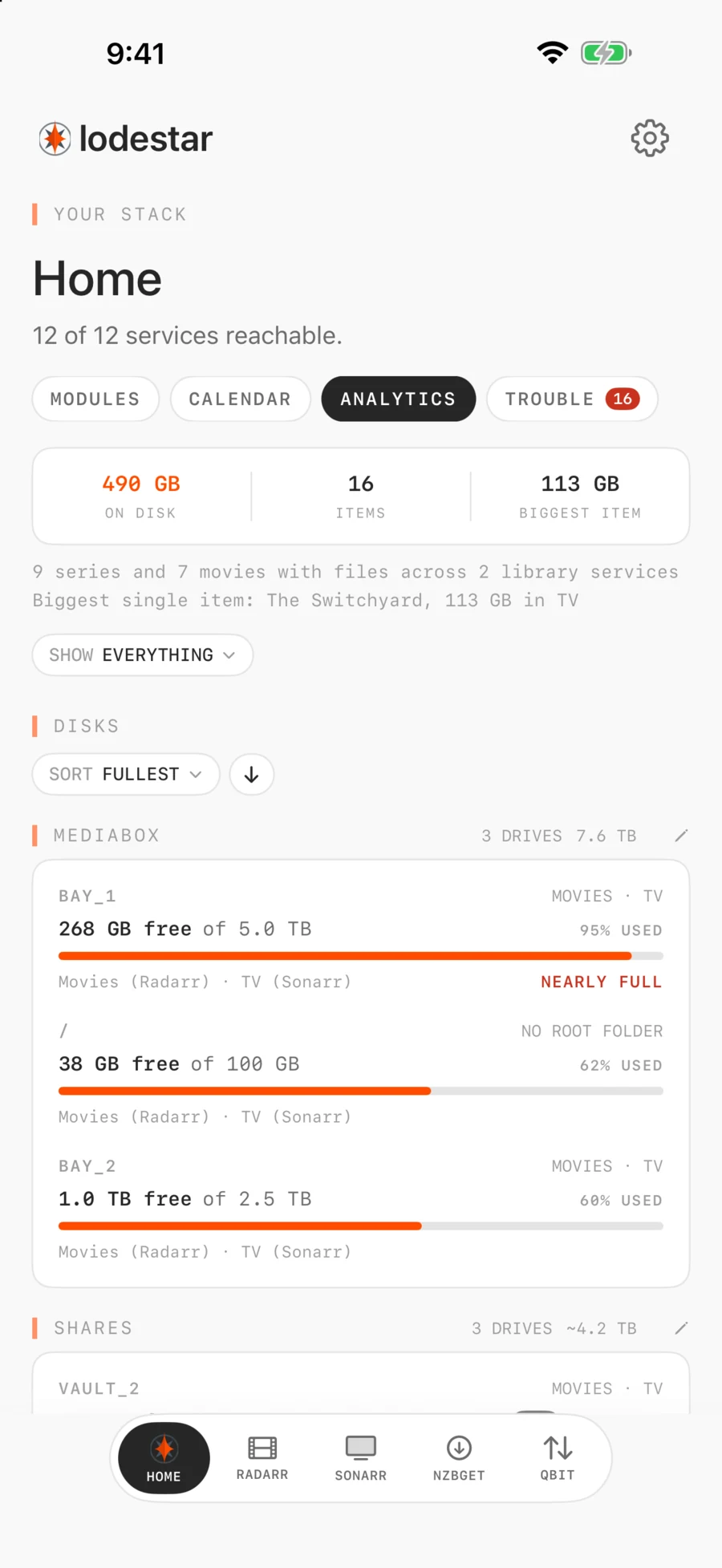
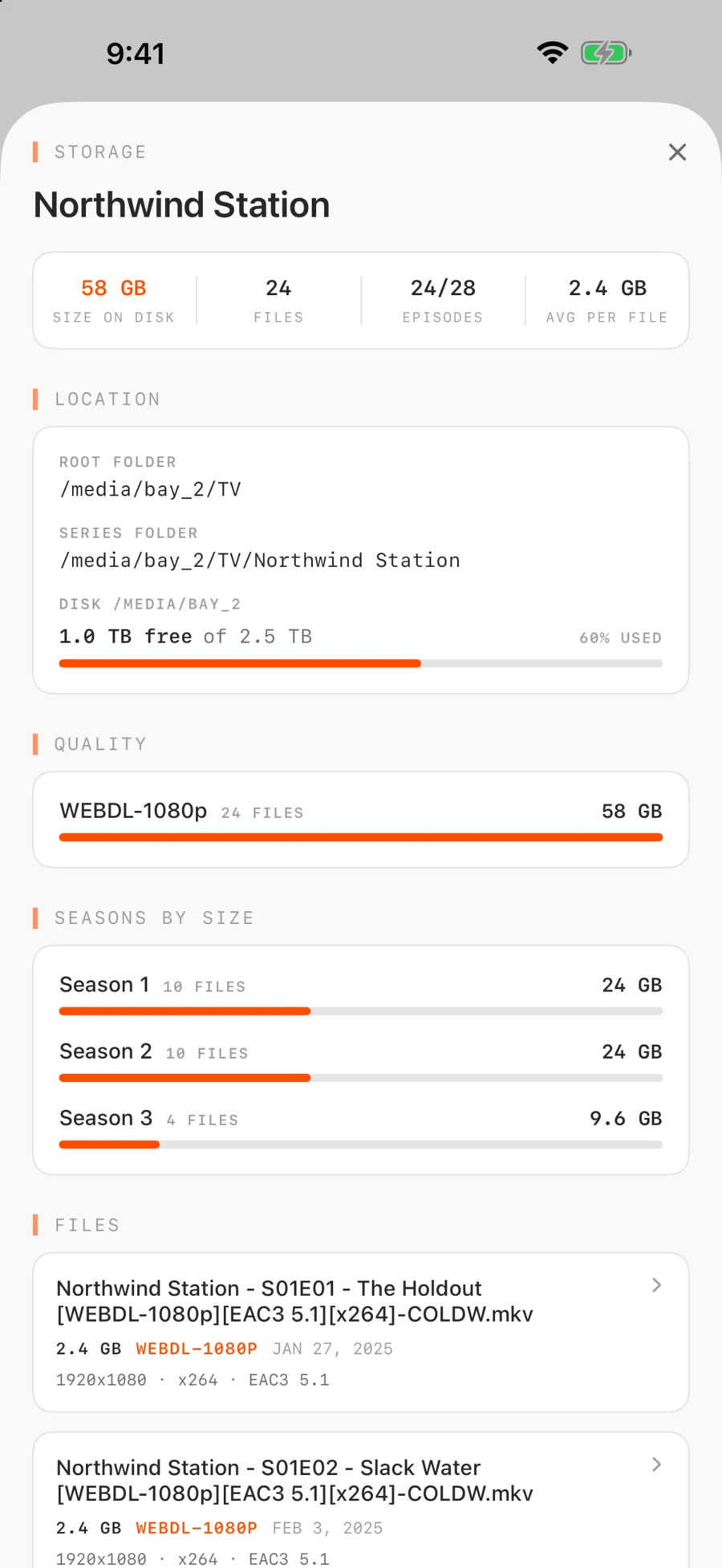
Where the space went. Drives grouped by the machine they live on, the biggest series and films, space per episode, and how much each client has pulled down.
Requests and subtitles
The household, handled. Approve what people ask for through Overseerr or Jellyseerr, chase missing subtitles in Bazarr, and see which indexer is failing in Prowlarr.
On the device
Notifications without a middleman. New problems are raised on the phone itself, without a lodestar push service. iOS decides when to look, which means minutes rather than seconds, and every screen says so.
Native
SwiftUI, iPhone and iPad. Dark mode, widgets for the home and lock screens, designed empty states, and a short tour that points out the gestures. No web views pretending to be an app.
[ 03 / 05 ] · Services
Seventeen, all first class.
Each one is a real module, not a link out to a web UI.
Radarr
Films: library, upcoming, missing, queue, history, releases.
Sonarr
Series and seasons, episode by episode, packs included.
Prowlarr
Every indexer in one place, including the ones it has benched.
Bazarr
Missing subtitles, and the search that fills them.
Overseerr
Requests waiting on you, approved or declined in a tap.
Jellyseerr
The same, for a Jellyfin household.
Plex
Who is watching what, right now, and stop it if you can.
Jellyfin
Sessions and libraries, on the modern and legacy paths.
Emby
Same shape, its own quirks handled.
Tautulli
History and statistics for a Plex server.
NZBGet
Queue, history, logs, per-server volumes.
SABnzbd
Queue, history, retries, per-server stats.
qBittorrent
Trackers, peers, files, categories, limits.
Transmission
The session handshake handled properly.
Deluge
Labels and a straight answer when the daemon is detached.
LazyLibrarian
Books and audiobooks: wanted, search, downloads, imports.
Audiobookshelf
Listen, keep your place, and see what is on the shelf.
[ 04 / 05 ] · Pricing
Three ways in. Pay for what you use.
No per-service unlocks and no Pro-and-Ultra ladder. The agent and its web app on your own network are free. Lifetime buys the app. Monthly buys remote access.
Lifetime
$19.99 once
The app, unlimited profiles and services, and thirty days of remote access included. Nothing recurring, nothing to cancel.
Monthly
$2.99 a month
Remote access and the web app, from anywhere. Eligible new subscribers start with a free week. Cancel any time in Settings.
The free tier is genuinely usable: one profile with up to two services, with nothing else held back, so you can decide with your own servers rather than on our word. United States pricing; it differs elsewhere.
[ 05 / 05 ] · Privacy
Your servers stay yours.
On your own network lodestar collects nothing: no account, no analytics, no crash SDK, and no server of ours between your phone and your machines. Addresses and preferences stay on the device; API keys live in the iOS Keychain. Sign in for remote access and we hold your account, and our relay sees that your agent connected, when, roughly where from and how much passed, while the traffic itself stays sealed. Artwork for a title you have not added yet comes from the metadata provider, and that has its own switch. Stated here because it is the kind of thing an app usually leaves out.